

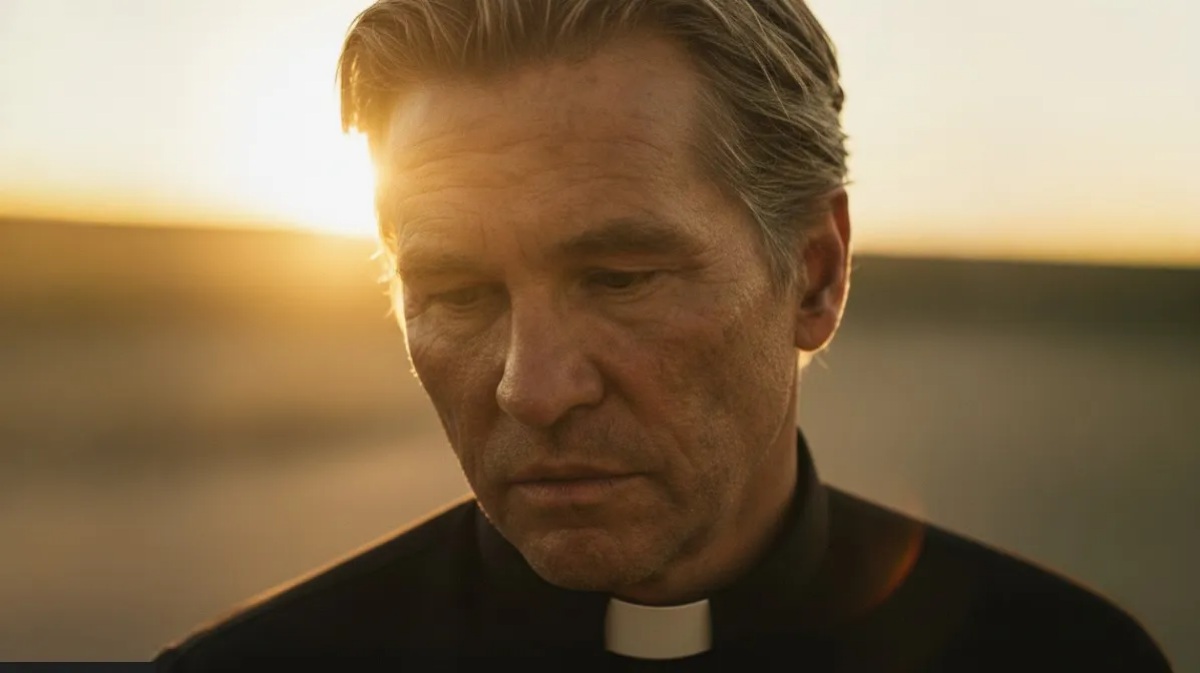
If you may recall, the legendary actor Val Kilmer passed away at the age of 65 in April of last year. Despite this, he is still set to appear in First Line Films’ aptly named upcoming movie “As Deep as the Grave”, but not in the way you might expect. According to Variety, the late actor did not film a single scene for the project. Instead, the studio uses state-of-the-art generative AI to recreate his performance, claiming it marks the first instance of its kind in a feature film.
As Deep as the Grave is an indie film that follows Southwestern archaeologists Ann and Earl Morris as they document their excavation in Canyon de Chelly, Arizona, uncovering the history of the Navajo people. Kilmer, best known for Top Gun and Batman Forever, was originally cast as Father Fintan but could not take on the role due to complications from throat cancer.
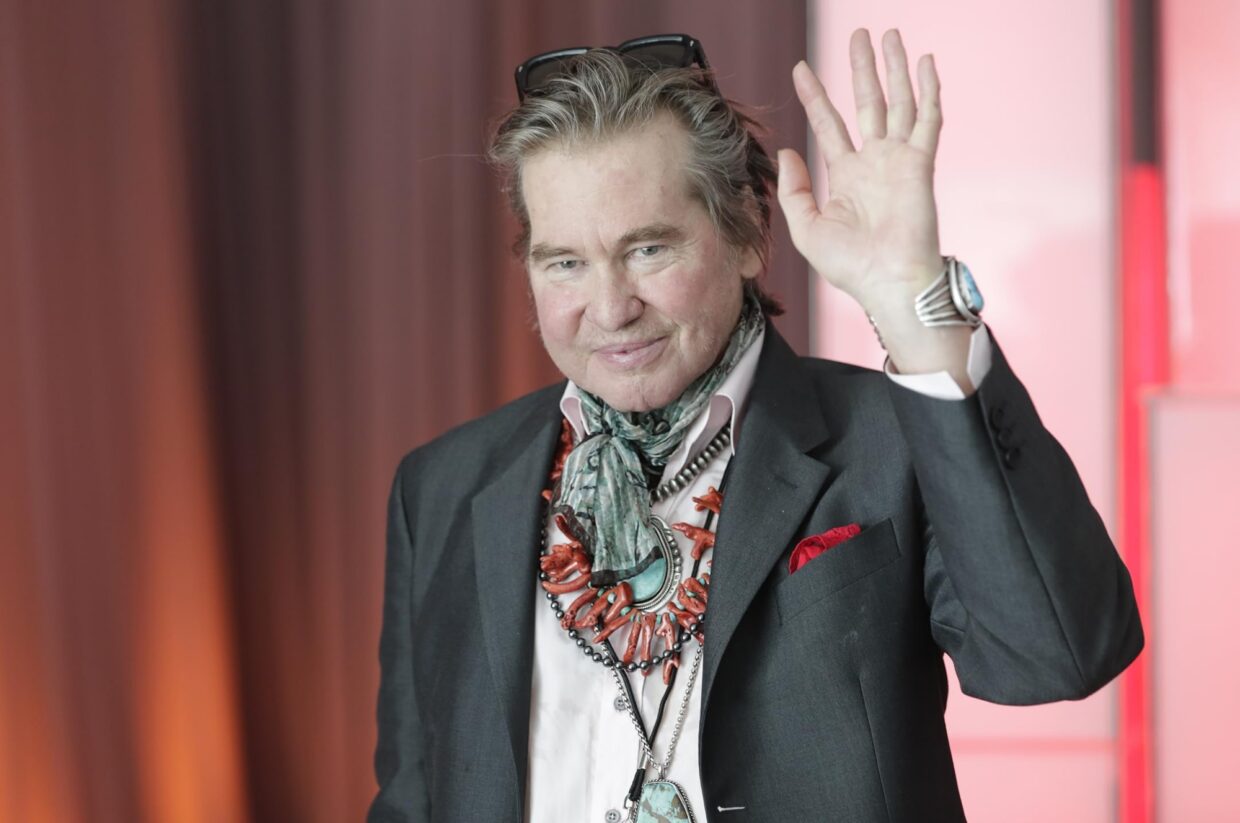
Coerte Voorhees, the film’s writer-director, said he specifically wrote the role of Father Fintan with Kilmer in mind, citing the actor’s Native American heritage as well as his ties to and love for the American Southwest. Although he never worked with Kilmer directly, he brought the character to life using AI, collaborating closely with the actor’s estate and his daughter, Mercedes Kilmer.
The director said that Kilmer’s family believed that the film was really important to the late actor and that he wanted to be a part of it. According to him, it was this vote of confidence that pushed him to use artificial intelligence to imitate the Top Gun actor’s likeness for the film, mentioning it was what the actor wanted even though it might be controversial. The featured image above shows an official still featuring the AI-generated version of Val Kilmer.
The First-Ever AI “Performance”: Why AI In The First Place?
Beyond writing the priestly role for Kilmer, the filmmakers cited several reasons for using artificial intelligence. For one, As Deep as the Grave is, first and foremost, an indie production that had to endure shutdowns and restrictions during COVID-19, which lengthened the production period to six years. At one point, the filmmakers even considered cutting scenes involving Father Fintan due to budget and time constraints. However, they ultimately chose to keep them to help “round out the narrative”.
“We really figured out that this is a major missing element,” said Coerte Voorhees. Under normal circumstances, studios would recast the role and reshoot the necessary scenes. However, as an indie production, the film did not have the budget for reshoots, prompting the team to turn to generative AI. According to IndieWire, the film is currently in post-production and is now looking for distribution.
Ethics And Consent
Naturally, the use of generative AI in any art field, be it in imaging, movies, or music, is still a hotly debated subject. Most members of the community largely despise the technology because it can easily replicate a person’s likeness without consent. However, Coerte and his brother John, who produces the film, say they want to demonstrate AI being used ethically.
As mentioned earlier, the brothers worked closely with and compensated Kilmer’s estate for his appearance. Moreover, the late actor’s daughter, Mercedes, expressed her support for the film, saying that the “unique role in it really resonated with him”. She adds that Val Kilmer always viewed emerging technologies, such as AI, with optimism “as a tool to expand the possibilities of storytelling”.
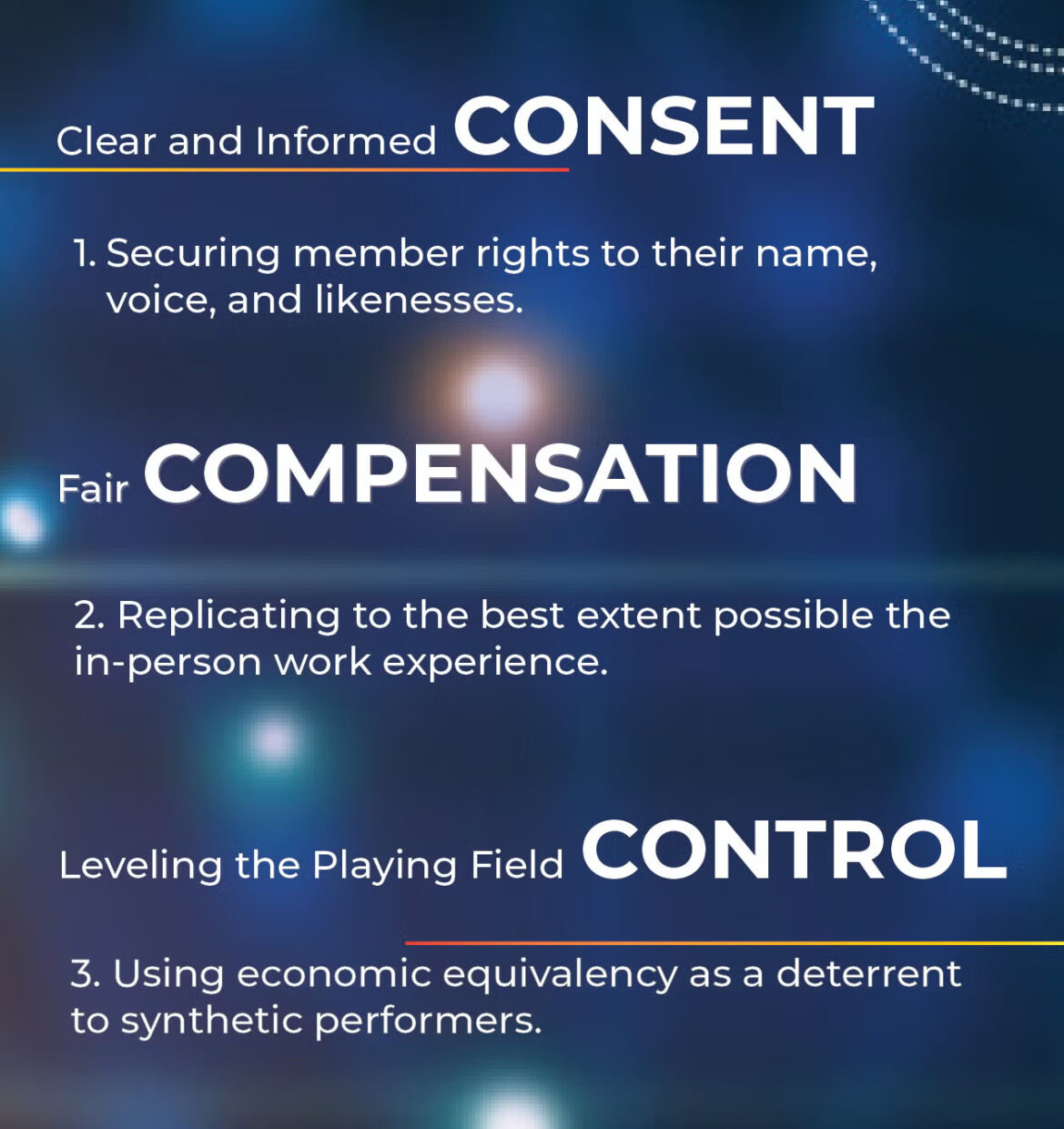
Further, the brothers note that Val’s AI appearance in the film complies with SAG-AFTRA guidelines. For those unfamiliar, these guidelines specify that any use of AI requires clear and informed consent, fair compensation, transparency, and control.
Impact On The Industry: Should This Be The Standard?
You may be aware that AI isn’t particularly new in the film industry. We’ve previously reported that the late James Earl Jones gave Disney his blessing to recreate his voice as Darth Vader using AI prior to his death. Generative AI has also been used to create special effects and shots in a matter of moments. Not to mention the AI actress trying to make it in Hollywood. All of these developments have stirred controversy at one point or another, yet filmmakers continue to use the tool, and it’s not hard to see why.
However, this marks the first time a studio has used generative AI to recreate both the voice and likeness of a late actor. Though it is done with consent, we can only imagine the backlash. Some may point to reports that Kilmer himself used AI for Top Gun: Maverick, but the film’s director, Joseph Kosinski, denied those claims, saying they only digitally altered his voice for added clarity.
If we’re to speculate, this news will likely open the floodgates for more experimental uses of AI in films beyond the usual special effects enhancements. That said, many people remain understandably wary of the technology. With AI potentially becoming the industry standard, concerns over major job displacement are becoming more and more real—after all, actors themselves can now be replaced by digital recreations.

Although the filmmakers did their due diligence to ensure their work meets industry standards, the debate now turns to the old adage: “just because you can, doesn’t mean you should.” AI has improved dramatically in just a few years and looks far more natural than earlier attempts. Even so, it still feels somewhat uncanny. It’s also unsettling that the filmmakers are using the likeness of a deceased actor to perform a role, even with consent from the relevant parties.
It’s worth noting that not everyone is on board with artificial intelligence. Some viewers may simply shun the film if the filmmakers place AI front and centre, or even because of its association with the technology. There’s also a real risk that, if the film doesn’t land, it could tarnish the late actor’s legacy. After all, the film’s success ultimately depends on how audiences receive it. A case in point is Darren Aronofsky’s “On This Day… 1776”, an AI-generated short-form series that faced harsh but deserved criticism for its unsettling visuals. Similarly, the director of the 2024 film The Brutalist sparked controversy by confirming that they used AI to “enhance” the production.
